

Autism and Suicide Prevention: Introduction to the Suicide Prevention for Autism Neuroaffirming Toolkit
Overview
The Suicide Prevention for Autism Neuroaffirming Toolkit (span.toolkit) is a co-produced, evidence-based resource portal for healthcare professionals supporting Autistic people experiencing mental health difficulties and suicide-related distress or crisis. Dr. Claire Brown and Associate Professor Darren Hedley will provide a brief overview of the current research, along with a guided walkthrough of the toolkit’s lived experience-led education materials, autism-adapted clinical tools for identifying and managing suicidal thoughts and behavior, and guidance on incorporating these resources into existing practice approaches.
The session will cover:
– An overview of autistic mental health, suicide risk factors, and barriers to care
– What the span.toolkit is and how it was co-produced
– How clinical assessment tools can be used in practice
– Where to find training, guidance, and support materials
Content warning: although this webinar will not discuss specific suicidal behavior, it does provide an overview of the research, including statistics, and will use terms such as suicide and suicide prevention, etc.
About the Speakers
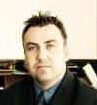
Dr. Darren Hedley is Associate Professor, Principal Research Fellow and Research Director of the Health & Wellbeing research program at the Olga Tennison Autism Research Centre (OTARC), School of Psychology and Public Health, La Trobe University. He is a past Suicide Prevention Australia National Suicide Prevention Research Fellow. His current research focuses on the intersection of mental health, suicide prevention, violence & trauma, and autism. He also continues to actively contribute to the field of autism employment research, as well as the Global Burden of Disease worldwide observational epidemiological study,.
A/Prof. Hedley completed his undergraduate (B. Psych, Hons) and postgraduate (PhD) degrees at Flinders University, South Australia and an M.A. in Counselling Psychology in Mexico City through the California School of Professional Psychology (CSPP).
A/Prof. Hedley is also known for experimental research in face recognition, emotion processing, early assessment and diagnosis, and confidence-accuracy calibration in diagnostic decision making. A/Prof. Hedley completed a clinical fellowship in neurodevelopmental paediatric psychology at The Ohio State University in the Child Development Center of Nationwide Children’s Hospital. There he specialized in assessment and diagnosis of children with intellectual and developmental disability, including autism spectrum disorder, under the mentorship of Professor Emeritus James A. Mulick. He also did post-doctoral work at the Facial Affective and Communicative Expressions (F.A.C.E.) lab at Emerson College, Boston, in the Department of Communication Sciences and Disorders. This research used motion capture, eye-tracking and bio-physiological measures to investigate how children with ASD integrate and produce verbal and nonverbal information, such as facial expressions and language.
A/Prof. Hedley is a Deputy Editor of the journal “Autism in Adulthood”, and is an editorial board member of the journal “Autism”. He has published work in referred journals including Autism, Autism Research, Depression & Anxiety, and the Journal of Autism and Developmental Disabilities. he is an ad hoc reviewer for multiple journals including Journal of Autism and Development Disorders; Neuropsychologia; Child Psychiatry and Human Development; Autism: International Journal of Research and Practice; Research and Practice in Intellectual and Developmental Disabilities; Journal of Experimental Child Psychology; IEEE Transactions on Industrial Informatics; Australian Psychologist.
A/Prof Hedley’s 2019 paper in Autism Research was in the top 10% of that journal’s downloaded papers.

Claire Brown is a Research Fellow in the Health & Wellbeing program at the Olga Tennison Autism Research Centre (OTARC) at La Trobe University. Her research focuses on mental health, suicide prevention, and barriers to care for autistic adults, with a particular focus on autistic people assigned female at birth (AFAB).
Claire completed her PhD at Deakin University in 2024, with her thesis examining the relationship between autism and eating disorders in women, including the distinct ways eating disorders present in autistic people, and how eating disorders contribute to delayed or missed autism identification.
As a Suicide Prevention Australia Post-Doctoral Research Fellow (2024-2026), Claire led the development of the Suicide Prevention for Autism Neuroaffirming Toolkit (span.toolkit): a co-produced, evidence-based resource portal supporting healthcare professionals to identify and respond to suicidal distress in autistic adults (www.spantoolkit.com).
Her current research extends this work into clinical and emergency care settings, with a focus on embedding co-produced and lived experience-led approaches to care across diverse health systems.
6:00 p.m. EST, Wednesday, Dec 9, 2026